



Belgium guide makes a timely return
Added: Thursday, May 14th 2026
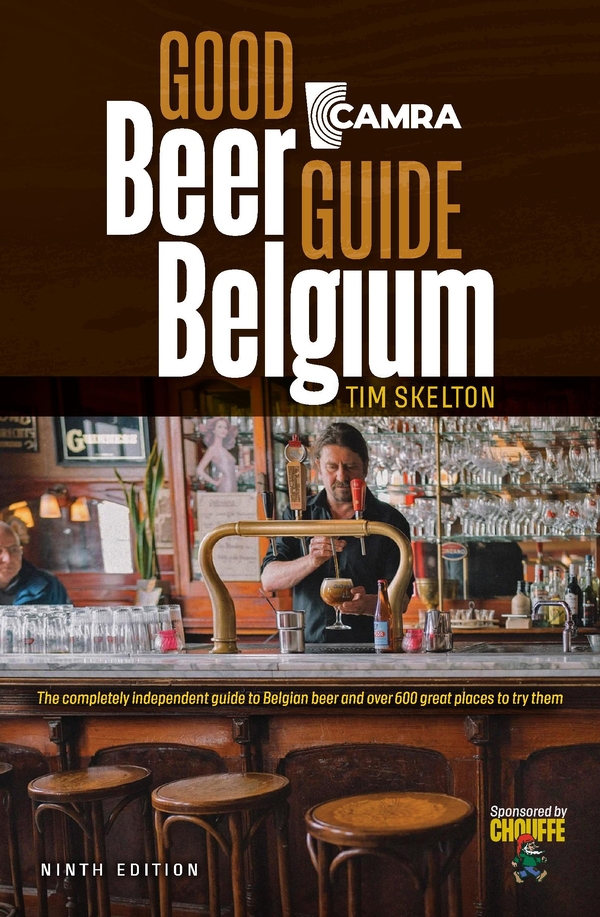
Good Beer Guide Belgium. Tim Skelton (CAMRA, £17.99, €19.99)
This is a remarkable book about a remarkable country. Who would have thought, back in 1992, that a guide to Belgian beers and bars would run to nine editions, with a clamour for a new edition after a break of eight years.
But then Belgium is no ordinary brewing country. A decade ago UNESCO placed Belgian beer on its list of Intangible Cultural Heritage site, testimony to the astonishing variety of beers found there and their deep roots in the tangled history of the Low Countries.
The origins of the guide go back earlier than 1992. A group of British beer writers were on a tour of Belgium in 1987 and ended up one evening in the ‘t Brugs Beertje – the Little Bruges Bear. We were joined by Michael Jackson who flew in from Scandinavia to sup with us in a bar that specialised in Belgian craft beers and refused to sell any lager.
Tim Webb and Michael Jackson were sufficiently inspired by the bibulous experience to launch, in Tim’s case, the Belgian guide, while Michael painstakingly researched and wrote the first edition of his Great Beers of Belgium.
Over the following years, Tim Webb was joined by Joe Stange as joint editor. They have now passed the baton to Tim Skelton who has lived in the neighbouring Netherland for 35 years. He put on his bicycle clips and helmet and went on many long tours of Belgium to update the guide.
And so once again we can marvel at a country where Trappist monks brew ale, beers are aged for years in giant oak tuns and – most amazingly of all – brewers still produce the world’s oldest beer style, Lambic, allowing wild yeasts in the atmosphere to start fermentation and the long journey to finished beer.
The new edition is timely. Yvan de Baets, brewmaster at the acclaimed Brasserie de la Senne in Brussels, details in a foreword to the guide, the problems facing Belgian brewers. They are problems created by Covid and the current conflicts in Ukraine and the Middle East.
They are compounded by changing consumer attitudes. Yvan says many drinkers are turning away from dark beers. “Modern Belgian beer drinkers have only one colour in mind: blond,” he says. “As a consequence, beer biodiversity is in danger.”
He criticises what he calls novelty beers such as North American hazy IPAs, super-sweet strong beers and no alcohol beers. And he argues that too many Belgians are happy to stay at home and stare at screens instead of going to bars.
British drinkers will share his concern and we will join him along with Tim Skelton in marvelling at the rich choice still available in Belgium and doing our bit to save that country’s historic beers for posterity.
For those coming fresh to Belgian beers, the section on the styles available will be a useful introduction to the pleasures that follow. Astonishingly, in the 21st century with half-empty churches, there are still five breweries run by Trappist monks.
The monks are strict about their calling. The monastery at Achel lost its last monk a few years ago and as a result the brewery had to drop its “authentic Trappist” label and is now a commercial producer. But the brothers at Chimay, Orval, Rochefort, Westmalle and Westvleteren continue to dazzle us with their magnificent ales.
Tim Skelton points out that the monks are anxious to deny there is any such thing as a Trappist “style”. Each monastery has its own distinctive recipes, though the brothers, naturally, work in harmony as a brewing community.
Tim then takes the reader through the variety of other styles available: amber, brown, black, white/wheat, strong dubbels and tripels and the overlooked but superb Saisons from Wallonia, the French-speaking region.
He leaves what he calls the best for the last section: wild beers. These are Lambic and Gueuze beers made with wild yeasts and then stored for many years in oak tuns where they pick up further attack by micro-flora and other organisms locked in the wood.
Not content with all this yeasty activity, the brewers then add such fruits as cherries and raspberries that add their distinctive flavours to the beer. The Lambic family is protected by both Belgian and EU laws to both ensure their future and their authenticity.
There then follows an 80-page brewery section that details all the producers with their beers and brief tasting notes. It’s a superb guide to knowing what to drink and what to avoid.
I don’t know how Yvan de Baets feels about Belgian IPAs as they are an oddity. IPA was first brewed in England for the Brits running India in the 19th century. Belgium, when the country was established, had colonies in Africa and played no role further east. But you can’t keep IPA down and the guide lists several, including the version from Achouffe in the beautifully wooded Ardennes, home to the mythical Chouffe gnome.
The bulk of the book is a city by city, region by region, gazetteer of the best bars and taprooms to visit. I don’t know how Tim Skelton managed these many visits without falling off his bike but I salute his fortitude and his liver.
In spite of the consumer changes mentioned by Yvan de Baets, the Belgians remain proud of their beers and their heritage. While Britain no longer has a single museum dedicated to its national drink, Belgium has several.
They include the Museum of Gueuze that’s part of the Cantillon Brewery in Anderlecht. It’s easy to reach from Brussels Midi Eurostar station.
And the old Stock Exchange – the Bourse – in central Brussels is now Belgian Beer World celebrating the history of brewing, with a rooftop bar at the end of the visit.
Edition nine of the guide has been a long time coming but it’s been worth the wait.