



Brewers recall hey-day of stout
Added: Sunday, January 11th 2026
It’s heartening to find that Britain’s rich tapestry of historic beer styles is recognised, cherished and promoted. While the rest of the world consumes mainly lager beer – some of it authentic, some a parody of the real thing – we can enjoy styles that are centuries old and which transformed brewing on a world scale.
First came India Pale Ale and its companion Pale Ale. They appeared early in the 19th century, made possible by the development of coke that meant barley malt could be gently roasted to produce pale grain and the first pale beers, decades before the first golden lagers appeared in Central Europe.
The interest in IPA has been phenomenal. As a result of heavy taxation in World War One, the style disappeared until it was rediscovered late in the last century by brewers in both this country and the United States.
The result was a world-wide fascination with the style that saw it produced in large volumes and in many other countries. The breweries section of the Good Beer Guide shows that many producers now have IPAs in their portfolios.
Then the clock was turned back to the early 18th century and the dawn of the Industrial Revolution. As London grew into a mighty metropolis, with docks, factories and market, there was an insatiable demand from the new working class for a beer to refresh them after their hard graft.
To meet that demand, new commercial brewers sprang up to turn the brown beers of the time – made with malt kilned over wood fires -- into stronger ones that were aged for several months. The beer became so popular among the thousands of porters working in the capital that the beer took on the name of Porter, along with its stronger version, Stout Porter, later reduced to simply Stout.
In common with IPA, Porter and Stout have been rediscovered on both side of the Atlantic. The brewing historian Martyn Cornell spent 10 years researching the style and, tragically, died last year just days before his major work, Porter and Stout, A Complete History, was published.
I wrote last month about the new Guinness visitor centre, the Open Gate Brewery, in London’s Covent Garden. It brews a Porter and tells the story of how the style was taken up Ireland.
The beers brewed at Open Gate are filtered and carbonated keg. Others brewers are producing Porters and Stouts that are not only closer to the originals but are also cask or bottle conditioned.
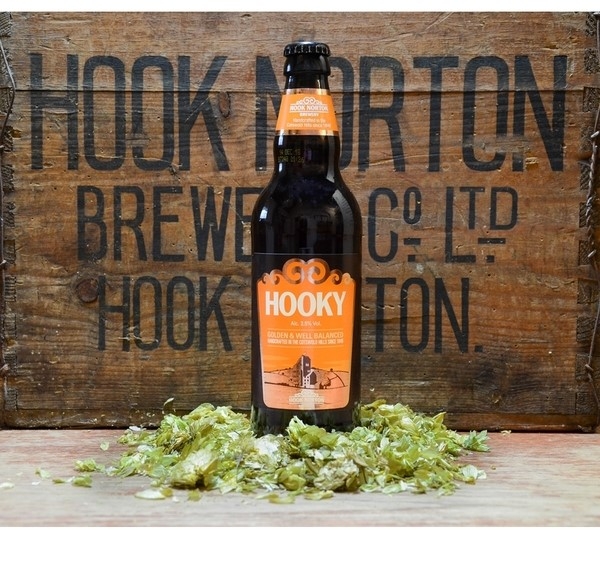
Hook Norton in Oxfordshire is a striking example of a Victorian tower brewery, with the stages of production flowing logically from floor to floor. It has a steam engine to provide power, a wooden mash tun and oak casks, with deliveries to local pubs made by horse-drawn drays.
It has tradition by the bucket-load and managing director James Clarke – representing the fifth generation of his family to run the company -- and his team have strengthened that tradition with a barrel-aged Double Stout (8 per cent).
The beer is aged in oak for 18 months, giving it time to pick up additional flavours to those of the malts and hops. The end result has notes of oak and vanilla along with roasted grain, dark fruits, chocolate and espresso, with a good underpinning of spicy hops.
James Clarke believes passionately in using the best English ingredients. Double Stout is brewed with Maris Otter, the finest malting barley, with roasted grain and Challenger and East Kent Goldings hops. It’s a seriously delicious, bottle-conditioned beer.
Burton-on-Trent is rightly considered the historic home of Pale Ale and IPA but the brewers there also made dark beers. Bass was the biggest brewer in the town and it made several Stouts and Porters, labelled P1 to P5, P standing for Porter. It was best known for P2, its export version that went on arduous sea journeys to Tsarist Russia and the Baltic States.
P2 was recreated by the Heritage Brewery, based in the National Brewery Centre. In 2022 Molson Coors, the Canadian/American group best known for Carling lager, closed the centre. Undaunted, Heritage joined forces with the Burton Bridge Brewery and continued to produce old Bass beers.
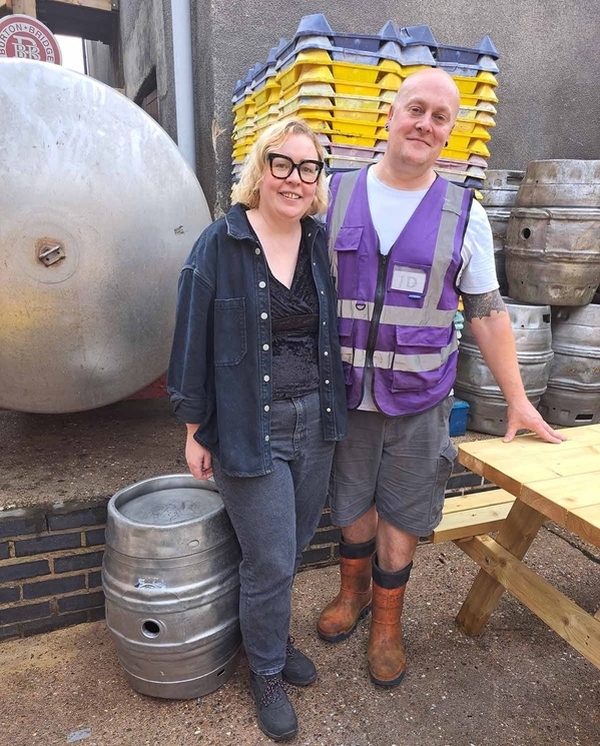
The joint breweries are run by Emma Cole and Al Wall (below) Al is Burton born and bred and he has been delighted to recreate beers that have a close association with his home town. His 8 per cent, bottle-conditioned P2 is brewed with Golden Promise pale malt – a grain popular with Scots whisky distillers as a result of its fine aroma and flavour – with black and Vienna darker malts. The hops are English Fuggles and Goldings.
It’s an immensely complex beer with aromas and flavours of chocolate, espresso coffee, molasses, peeled nuts, dark malts and fruit, with a good balance of spicy hops.
It’s not surprising that the Russian Tsar and his courtiers looked forward to fresh consignments of the beer arriving in St Petersburg.
We can make a shorter trip to Burton to sample P2 and the other beers, both modern and historic, produced by Burton Bridge and Heritage.
Along with James Clarke at Hook Norton, Emma Cole and Al Wall are keeping our proud brewing traditions alive for current and future generations to drink and admire.
•First published What’s Brewing January 2026.